
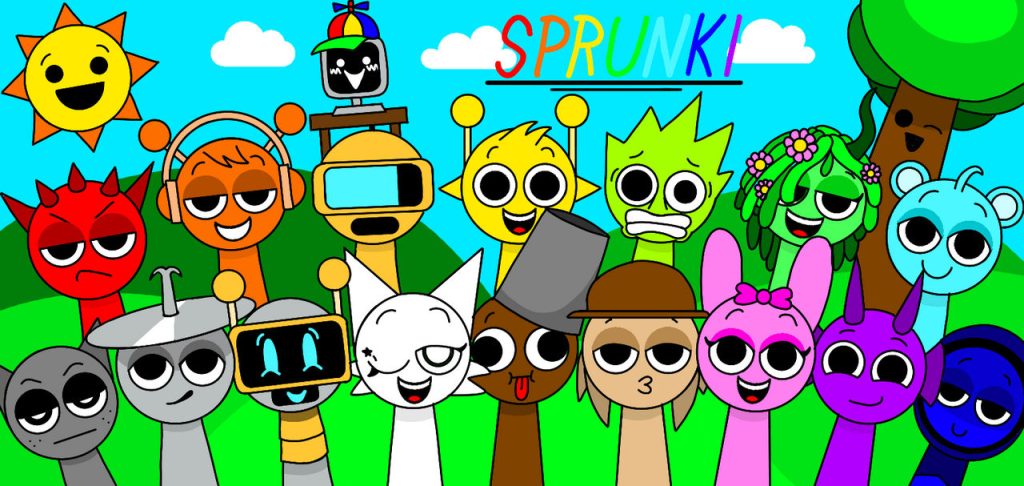
What is Sprunki?
As parents, we’re always keeping an eye on what our kids are playing, and lately, Sprunki has been making waves. I first heard about it when I caught my daughter playing it one evening. At first glance, the eerie visuals made me uneasy, but as I listened, I noticed something intriguing—the music had a certain vibe, a mix of haunting yet catchy beats that kept drawing her in. It made me wonder: is this just another passing trend, or is there more to it?
Sprunki is a horror-themed modification of Incredibox, a popular music-mixing game. It allows players to drag and drop characters into a scene to create unique sound combinations. Unlike the original Incredibox, which focuses on beatboxing and music composition, Sprunki incorporates eerie visuals and unsettling sound effects, making it a unique mix of creativity and horror.
The Good Side of Sprunki
While the horror aspect might make some of us hesitate, Sprunki does offer some benefits for kids who enjoy it:
Encourages Creativity
- Just like Incredibox, Sprunki allows players to experiment with sounds and create unique musical compositions, fostering creativity and artistic expression.
Engaging and Entertaining
- The combination of horror and music creates a thrilling experience that keeps players engaged, making it an interesting form of entertainment.
Community Interaction
- Players can share their musical creations and interact with an active online community, encouraging collaboration and social engagement.
Critical Thinking and Problem-Solving
- Some aspects of the game require players to explore and experiment with different sound combinations, which can enhance problem-solving skills.
Viral Appeal and Cultural Influence
- Sprunki has gained popularity through social media, encouraging discussions about music, horror, and game design.
The Concerns for Parents
Despite its creative potential, there are some things parents should be mindful of, especially for younger children:
Scary and Disturbing Content
- The horror elements, including eerie visuals and unsettling sound effects, may not be suitable for all players, especially younger children who may experience fear or anxiety.
Nightmares and Anxiety
- Exposure to horror-themed media can cause sleep disturbances, nightmares, and heightened anxiety in some children. After my daughter played for a while, she admitted that some of the visuals made her a little uneasy, though she still found the game fun.
Desensitization to Scary Themes
- Frequent exposure to horror games may lead to reduced sensitivity to frightening content, which could impact emotional development.
Impact on Sleep Patterns
- Playing intense horror-themed games before bedtime can interfere with relaxation and sleep quality due to increased adrenaline levels.
Online Exposure and Community Risks
- As Sprunki grows in popularity, children may be exposed to online discussions or content that may not be age-appropriate.
How Parents Can Address These Concerns
If your child is interested in Sprunki, here are a few ways to ensure they have a safe and balanced experience:
- Monitor Gameplay – Observe how your child reacts to the game and set limits on playtime if needed.
- Encourage Open Communication – Talk with your child about the game, their favorite parts, and how it makes them feel to identify any distressing effects.
- Set Age-Appropriate Boundaries – If your child is too young for horror-themed games, consider redirecting them to more suitable alternatives.
- Promote Diverse Interests – Encourage engagement in creative and educational activities outside of gaming.
- Use Parental Controls – Manage screen time and restrict access to content that may not be appropriate.
Conclusion
Sprunki presents both positive and negative aspects, making it a fascinating yet potentially concerning game for younger players. While it can inspire creativity and engagement, it also carries risks that parents should be aware of. After watching my daughter play, I’ve come to appreciate both the appeal and the concerns that come with it. By staying informed and involved, we can help our children navigate gaming in a way that is fun, safe, and age-appropriate.
If you’re curious and want to try the game for yourself, check it out here: Online Game Sample

I had no idea Sprunki was this dark — glad I read this before my kid asked to download it. The breakdown of the jump-scare triggers and the audio cues is really helpful for setting actual parental controls.
This is a really balanced take on Sprunki. What struck me is your point about desensitization — the same creeping escalation shows up in co-op horror like The Outlast Trials, where the tension is atmospheric rather than jump-scare spam, so parents end up with a similar conversation about what kids can process. One practical angle you didn’t mention: checking whether the game’s content is stable over time. Mods and horror reskins can change with updates, so it’s worth revisiting the visuals every few months rather than judging once. For older teens who want to graduate into more structured horror, the loadout builder at The Outlast Trials Wiki shows rigs, amps and voucher costs before anyone commits to a run, which helps gauge how intense a session will be. Either way, your monitoring-and-conversation advice applies across all of it.
This is a really balanced take on Sprunki, and the point about sleep patterns rings true—my nephew was playing horror-tinged music games right before bed and it showed. One thing I would add to your parental-controls list: it helps to check whether a game is a mod or fan project rather than an official release, because fan builds often ship with unvetted assets and update unpredictably. I have run into the same issue with remastered fan guides, where patch notes and version differences matter a lot for what kids actually see on screen. For anyone comparing versions and content changes across fan-made updates, Witcher 3 Remastered patch notes keeps a sourced, fairly current breakdown. The open-communication tip is the most underrated one here.
This is a really balanced take on Sprunki. I appreciated that you didn’t just label it as bad because of the horror elements, since the creative sound-mixing aspect genuinely does have value for kids who enjoy experimenting with music. One thing I’d add to your list of alternatives: if your child likes the progression and discovery loop of these games but you want something without the jump-scare imagery, there are plenty of grinding-style titles that scratch the same itch. My son moved from Sprunki to Drill to Earth’s Core, and the layer-by-layer progression keeps him engaged without any of the unsettling content. I sometimes check a Roblox drilling progression guide to stay informed about what he’s working toward. It breaks down every layer, enemy stats, and upgrade costs, which makes it easier to have those open conversations you mentioned about what he’s actually doing in-game. Worth bookmarking if your kid ever branches out.
The sound combinations and the visual reveal are worth checking separately. A parent could explore the exact version the child has opened before deciding whether its imagery is suitable; a familiar game name does not tell them what a particular modification contains. Keeping that review specific also avoids treating every music-mixing game as the same experience.
Such a balanced and grounded take for parents! It’s refreshing to see someone acknowledge the genuine musical creativity of the mod without brushing aside the very real unsettling shifts that can easily catch younger kids off guard.
As a parent who also keeps an eye on gaming trends, I appreciated your balanced take on Sprunki. The point about desensitization to scary themes really resonates—it’s something I’ve noticed with my own kids. If you’re concerned about horror elements but still want to encourage creative gaming, you might look into Roblox games like Slayers 2. It’s anime-inspired with demon-slaying themes, but the community is vibrant and there are lots of parental guides out there. For anyone wanting to understand the mechanics, clans, and breathing styles, a good resource is Slayers 2 wiki. It breaks down everything from trainer locations to redeem codes, which can help parents gauge whether it’s appropriate. Just like Sprunki, it’s all about moderation and open dialogue.
Thanks for this balanced breakdown. I appreciated that you didn’t just demonize Sprunki but acknowledged the creative thinking it can spark, while still being honest about the sleep and anxiety risks. One thing I’d add to your list of age-appropriate alternatives: when my son wanted something tense but not frightening, we shifted toward link-based puzzle games where the challenge comes from navigation rather than jump scares. He’s been hooked on a free Wikipedia link racing game where you travel from one article to another using only the in-page links, with daily challenges and a leaderboard that resets each day. It keeps the problem-solving and community elements your article highlights, but there’s nothing eerie to process before bed, which made our evenings noticeably calmer.
Thanks for this thorough breakdown of Sprunki’s pros and cons. I appreciate how you highlighted both the creative potential and the concerns around scary content and sleep disruption. As a parent, I’ve found that horror-themed games can be a tricky balance, but there are alternatives that offer spooky storytelling without the intense visuals. For instance, free horror visual novels can be a great option—they’re browser-based, require no downloads, and feature hand-written reviews and screenshots so you can preview the content. My kids enjoy the story-driven scares without the same level of anxiety. It’s worth exploring if you’re looking for a middle ground.
The point about horror games before bedtime interfering with sleep due to increased adrenaline is something worth taking seriously — the creativity and music-mixing benefits seem real, but pairing that with unsettling visuals seems like a tricky trade-off for younger kids. Did your daughter’s uneasiness fade over time, or did you end up setting specific limits?
As a parent who has also watched a child get drawn into Sprunki, I really appreciated how this article balances the creative appeal with the very real concerns about anxiety and sleep disruption. The point about desensitization is especially important—it’s easy to overlook how repeated exposure to horror themes can shape younger kids. The practical tips for monitoring playtime and keeping communication open feel genuinely useful rather than preachy. It’s refreshing to see a piece that neither dismisses the game nor panics about it, but instead offers a thoughtful middle ground for families navigating this trend.
I appreciate how you highlighted the creative side of Sprunki—those haunting melodies really do spark imagination in unexpected ways. It’s a reminder that even games with eerie vibes can inspire artistic expression, much like how storytelling through music can be both playful and profound. If you’re ever looking to turn those unique soundscapes into visual stories, I’ve been experimenting with , which lets you create short, rich videos from text or documents—no setup, no hassle, just pure cr wan 3.0 ai video generator
As a parent, I really appreciate this balanced look at Sprunki. The way you highlighted both the creative music-mixing benefits and the potential for nightmares or anxiety is exactly what I needed to consider before letting my kids play. I also noticed you mentioned the online community aspect—that’s a real concern for me, so I’ll be sure to use parental controls and talk to my children about what they see. Thanks for the thoughtful advice!
remove ai metadata
A useful next step for parents is to look beyond a game’s surface style and ask what children are actually encountering while they play: the tone, frightening imagery, community content, and how easily they can move from one version or video to another. A calm conversation is often more informative than a blanket rule, because it gives a child space to describe what feels entertaining, confusing, or unsettling. That context helps make supervision more specific.
The point about noticing what children are playing is especially important when a game’s tone shifts from playful to unsettling. A useful next step for parents is to look beyond the title and ask what content appears during ordinary play, what children are sharing with friends, and whether the game’s horror elements are likely to feel confusing or distressing at their age. A short, calm conversation can turn concern into guidance rather than a blanket ban. Media awareness also works best when it includes the child’s own view of what makes the game appealing.
A parent-facing overview is especially useful when a game becomes popular through clips, friends, or unfamiliar online platforms. Beyond identifying the horror elements, it helps to explain what parents can check: the game’s age rating, user-generated content, chat features, in-app purchases, and whether children can play without supervision. Conversation is usually more effective than a blanket ban, because it gives children a chance to describe what attracts them to the game. Context makes a better safety decision possible.
The most useful part of this discussion is the reminder that a game’s popularity can reach children before parents have had a chance to understand its tone. For something like Sprunki, it helps to look beyond the title or surface gameplay: ask what themes appear, whether frightening imagery is presented suddenly, and how a child reacts after playing. A short conversation and a quick check of the game together can reveal more than an age label alone.
A useful starting point for parents is separating the game’s surface-level appeal from the parts that may be unsettling or confusing for a child. Rather than relying only on a title or genre label, it helps to look at the actual content, the platform where it is played, and whether a conversation is needed afterward. That context makes supervision more specific and less reactive.
When a game becomes popular with children, the most useful conversation is usually specific rather than alarmist. Parents can ask what the game involves, whether the child has encountered frightening material, and how they feel afterward. Checking age guidance, creator content, and in-game interactions provides context that headlines alone cannot. Consistent supervision works best when it leaves room for children to describe what they are seeing.
I appreciated the balance here, especially noting that Sprunki’s music-making side can be creative while the horror visuals may still be too intense for younger kids. The reminder to check gameplay videos first and talk through what they’re seeing feels more useful than just banning it outright.
I absolutely agree with your points about play Sprunki read more free. This is really valuable. Keep up the excellent work!
Sprunki’s mix of beat-making and creepy visuals is such a clever way to get kids experimenting with sound. I tried it with my nephew and we ended up layering tracks for an hour. If you want a calmer, more creative take on audio/video projects, check out Bernini Video – it is an open-source editor that pairs nicely with the same spirit of creative play.
Your breakdown of Sprunki is very thorough, especially highlighting both the creative engagement and the potential pitfalls for younger players. As a parent and someone who works with data, I noticed how game-based creativity can spark an interest in visual storytelling. For older kids or parents who want to explore visual patterns from their own research or hobbies, there are tools that make complex graphics easy to generate without coding—like a custom scientific volcano plot maker that creates publication-ready figures in minutes. It’s a great bridge between the creative play Sprunki encourages and practical, professional visualization skills.
What a cool exploration of rhythm-based horror games! If your kids are into creating their own music loops, you might also enjoy turning those tracks into something visual — this music video ai generator lets you transform audio into synced videos with zero editing experience. It’s a fun way to add another creative layer to their musical experiments. Worth checking out if you want to bridge the gap between making beats and watching them come alive on screen!
Good breakdown for parents trying to understand what their kids are into. The creativity angle is real, mixing sounds and experimenting is genuinely engaging. Worth knowing the difference between the horror aesthetic and actual harmful content before deciding.
The music-mixing mechanic is what makes Sprunki genuinely interesting — it’s one of the few games that teaches creative composition through play, even if the horror wrapper can feel jarring at first.
Horror and music? Sounds like my Saturday night! But seriously, Sprunki seems like it could be a fun way for kids to be creative while giving parents a few chills too. If you’re curious about meme-ing the game vibes, there’s this cool tool that does the trick—check it out Kirkified.
do not play this game it is so unsetling i had nightmares i am 10 years old i do not like this game i like been playing it. oh yeah this is my dads account.
do not play this game it is so unsetling i had nightmares i am 10 years old i do not like this game i like incredibox been playing it. oh yeah this is my dads account.
Awww, hannah.. it’s sad to hear that. You should not really play this kind of games honey. Good thing you manage to have a new game that you actually enjoy, I think I should check about it. Thank you!
This article offers fantastic, practical advice for teaching kids financial literacy. Making money lessons engaging is key. It reminds me of how games can be powerful learning tools. For instance, Steal the Brainrot teaches strategy and quick decision-making in a fun, competitive environment. While it’s pure entertainment, the underlying skills of resource management and tactical thinking are surprisingly relevant. It’s a great example of how game-based learning, even for adults, can reinforce valuable concepts. Thanks for sharing these insightful activities
You are most welcome! Thank you for reading it too. Your comment makes my heart full!
Thanks for the heads-up on Sprunki! It’s so important for parents to be aware of the games their kids might be playing, especially when horror themes are involved. Articles like this really help keep the conversation open and informed.
On a lighter note, if you or anyone needs a fun, safe break from intense games, I’ve been enjoying this creative music browser game: https://incrediboxgame.net 🎶. It’s relaxing and suitable for all ages — a great way to unwind and spark some creativity!
Really appreciate the balanced take on “Sprunki” — it’s important for parents to stay informed about the content and emotional tone of the games their kids engage with. Horror games can be thrilling, but not always age-appropriate.
On a lighter note, if you’re looking for a creative and kid-friendly game alternative, I recently came across this fun interactive one: https://spunky-game.com — it’s quirky, music-based, and a great way to encourage creativity in a playful setting. 🎮🎶
Thanks so much for your kind words! I’m really glad the article resonated with you. You’re absolutely right—horror games can be exciting, but it’s so important to make sure they’re appropriate for the age and emotional readiness of our kids.
And I love that you shared Spunky! I just had a quick look, and it seems like such a fun and creative alternative—perfect for sparking imagination without the spooky stuff. 😊 Always great to discover new, kid-friendly games. Thanks again for the tip it will surely help me and other parents around!
The money lessons article offers great ideas for teaching kids about budgeting and saving. I‘ll try involving mine in a virtual allowance system where they earn stars for chores and spend them on treats. Too bad the horror game title doesn‘t mention how scared parents might get watching kids play it
Hi William,
Thanks so much for your thoughtful comment! I’m glad you found the money lessons article helpful, your idea of using a virtual allowance system with stars sounds both fun and practical. Kids really thrive when learning feels like a game!
And yes, you’re absolutely right about Sprunki, the title should come with a warning for parents too! 😅 It’s surprising how some of these games can slip under the radar while still having such intense themes. Thanks for pointing that out with a bit of humor—it’s a good reminder for all of us to stay alert.
Let us know how your star system goes! 😊